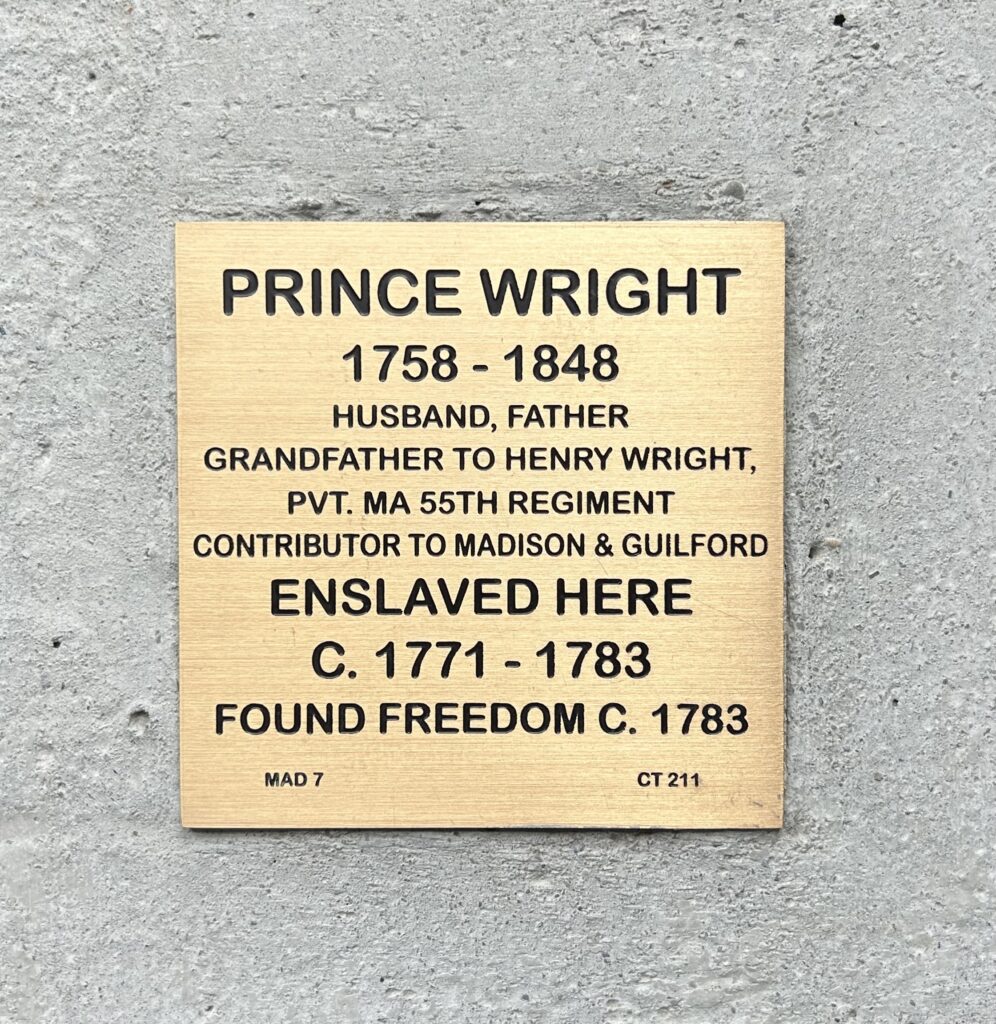
Prince Wright
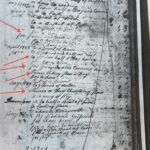
An account book kept by several generations of the Grave family shows that a young man named Prince was among a series of individuals enslaved in the Deacon John Grave House, one of the oldest houses in Madison. Over the course of 12 years, from 1771 to 1783, records show Prince chopping wood, digging potatoes, plowing fields, pulling flax, carting goods, raking hay, hoeing crops, threshing grain, and performing other essential tasks on the Grave property. He was also hired out to some of the Graves’ neighbors, with Elias Grave keeping the proceeds for his labor.
Born around 1758, records suggest Prince was enslaved in Killingworth before being sold to Elias Grave. The 1761 inventory of David Wright in Killingworth lists several enslaved persons, including a man named Sampson, an unnamed woman, a girl named Damsel, and a boy named Prince. Dr. Benjamin Gale of Killingworth helped Wright’s widow, Esther, settle her husband’s estate, and in 1771, a bill of sale recorded the following: “I Benj Gale of Killingworthin N London County for Value received have sold in Plain & open Market my Negro Boy Named Prince to Mr. Elias Grave his Heirs.” For the next 12 years, except for the year 1775 when he is not mentioned, Prince’s name appears regularly in the Grave account book. Then, sometime around 1783, it disappeared. Eventually a land record shows a man named Prince purchasing property from Nathan Cole in 1789. In 1804, a “Prince Wright” can be seen purchasing land from Bela Fowler. Three years after that, church records show Prince Wright marrying a woman named Vice. Four years later Prince and Vice Wright are listed as the parents of a child named Sampson. Prince Wright’s name also appears in an account book for MJ Davis of Guilford in 1812 and 1818, where he is shown performing the kind of work he did in the Grave household. This time he was paid for it.
Primary Sources