Witness Stones Project for Schools
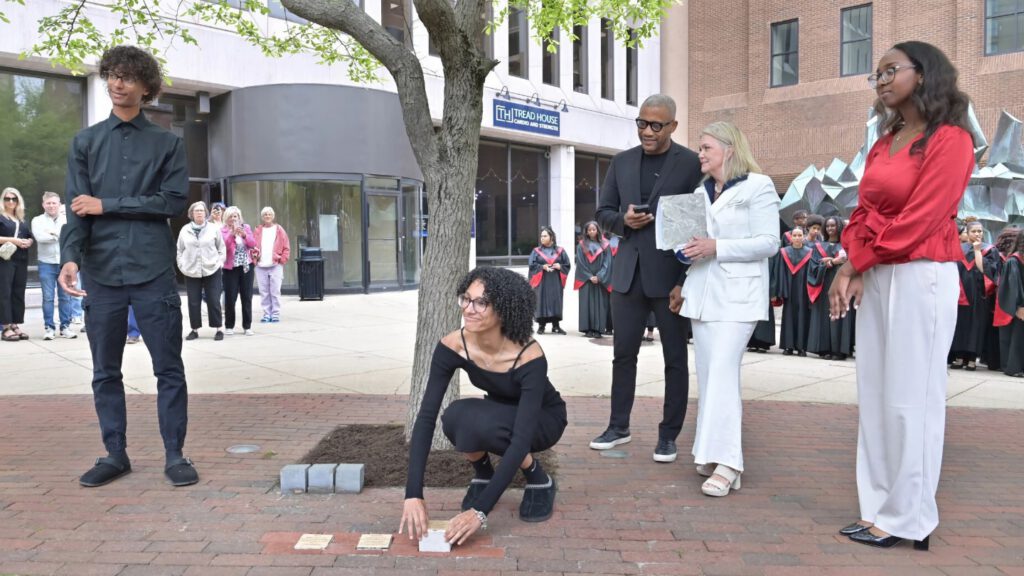
As the school and youth branch of Stopping Stones, the Witness Stones Project engages students, teachers, and educational organizations in deep exploration of archival records to recover the story of a single enslaved person. Its award-winning curriculum teaches students to analyze primary sources and historical accounts, creating a transformative learning experience. Each Witness Stones project concludes with the installation of a marker that honors the unique lived experience of the individual being commemorated.
History and Impact
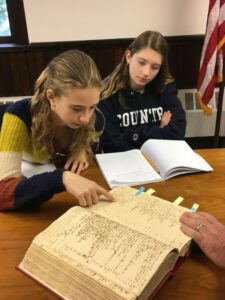
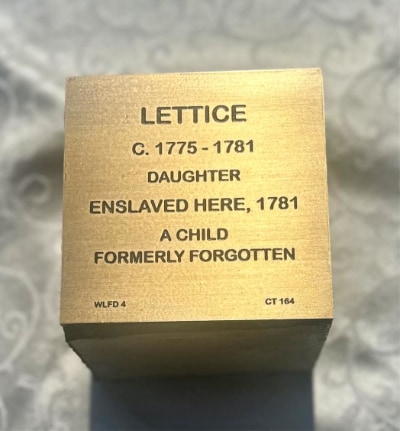
Founded in 2017 by an eighth-grade social studies teacher in Connecticut, Witness Stones is now in seven states, has engaged more than 13,000 students, and honors more than 300 individuals. A hands-on educational program, Witness Stones works with schools to identify a local enslaved person and then helps students decode documents, including account books, wills, probate inventories, church and town records, indenture contracts, manumission deeds, obituaries, and other surviving archival material. Students learn to interrogate historical accounts written from eighteenth- and nineteenth-century perspectives, and from these resources they piece together a narrative that repositions the enslaved person from unseen to protagonist. With the inevitable holes in the narrative, students grapple with unanswerable questions by exploring local context and other local figures to seek understanding. Students ask: Who wrote this document and what was their purpose? Whose voice is represented and whose is absent? How can we use these documents to envision a more complete narrative, one which includes enslaved individuals as people with agency, hopes, and dreams? Students create biographical sketches of the forgotten enslaved man, woman, or child and share those stories through many mediums, including art, poetry, and film.
Students who participate in the Witness Stones Project report that it helps them see their surroundings—and history itself—in new ways. They see the contributions, challenges, and triumphs of enslaved people in their town whose stories were unheralded. They see how this history has largely faded from public memory, even though the record is indisputable, and they contemplate why that is the case. They see the importance of listening to, celebrating, and standing up for everyone’s voices.
Students and teachers describe the Witness Stones Project as profoundly meaningful. It is also an act of civic engagement, inviting communities to help place their memorial and learn about the enslaved people whose contributions shaped their town but were largely forgotten—until now.
If you have questions or are interested in participating in the Witness Stones Project, contact Liz Lightfoot