Pero Hallam
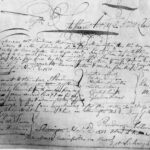
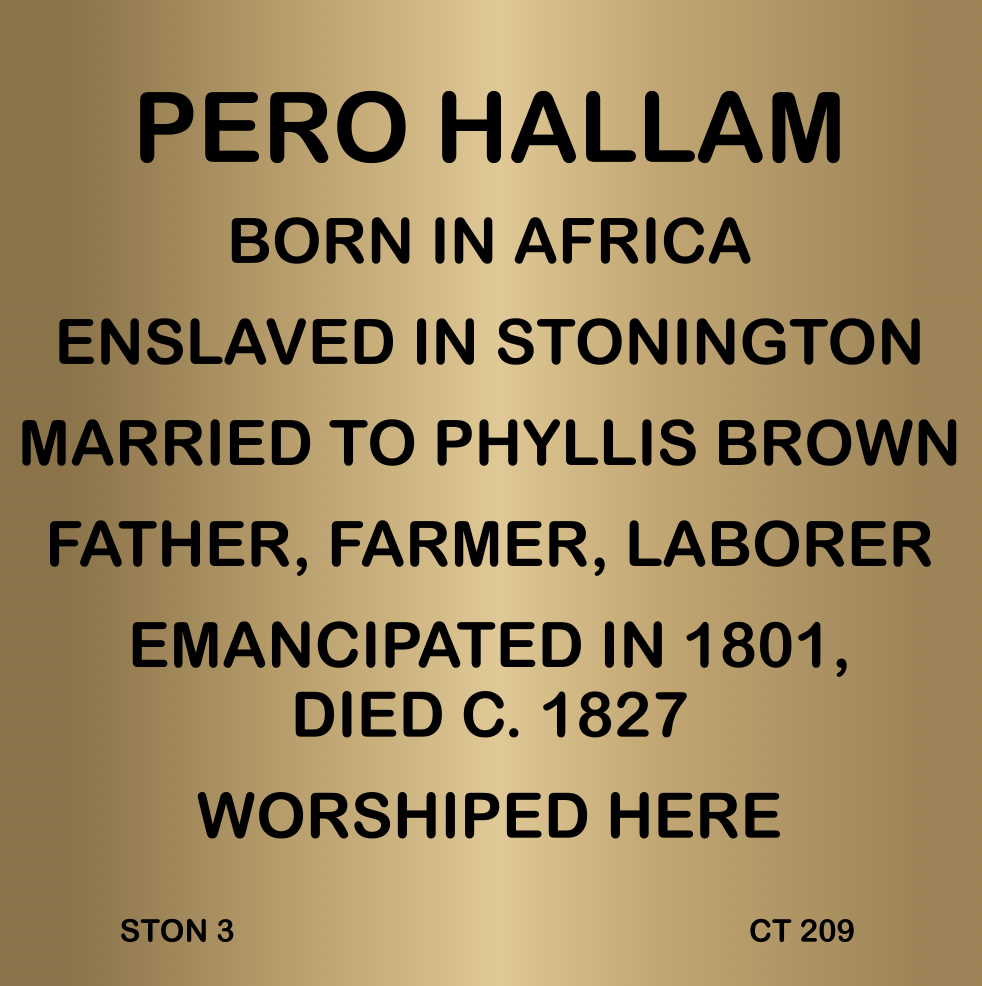
Records show that a child named Pero was owned by two Stonington merchants, Thomas Noyes Jr. and John Hallam. Sometimes identified as “Peter” in records, Pero was said to have been born in Africa, likely Cape Verde. Accounts of his life say he “retained strong vestiges of his African background” and that he “spoke only the most broken English until the day of his death” (Rose and Brown, Tapestry: A Living History of the Black Family in Southeastern Connecticut CT, 1979. p. 116). When Noyes died, an enslaved boy named Peter was listed in his 1755 inventory. The estate settlement shows that Noyes’s partner, John Hallam, then purchased rights to Pero. Members of the Hallam family continued to enslave him until 1801, when Pero was manumitted by Hallam’s daughter, Prudence.
The Hallams gave Pero a piece of land and a house, where he lived alone for many years despite being married to Phyllis Brown, who was enslaved by members of the Brown family. Even with their living arrangement, Pero and Phyllis brought at least seven and as many as eleven children into the world. When they were “very advanced in years” they were finally permitted to live together. Though they were members of separate churches, Pero the Baptist Church and Phyllis the Congregational, they would often attend each other’s churches, according to an account by Martha Denison Peet in “My Home in Connecticut Fifty Years Ago.” It is not clear when or where Pero Hallam died, but the last town record on which his name appears was in January 1, 1827. It is not clear when Phyllis died but an almshouse record shows her living there in 1829. She continues to appear in almshouse records until October 1833, after which there is no further mention of her.
Primary Sources