Sharper Rogers
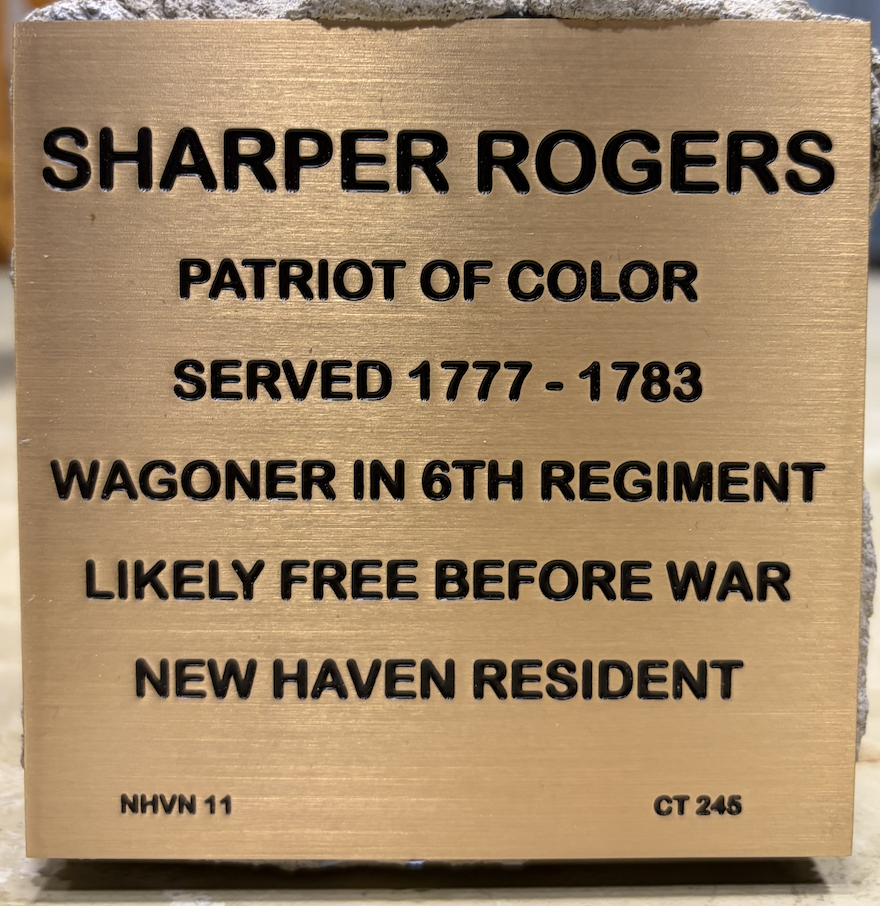
Sharper Rogers was among the 5,000-plus Black Revolutionary War soldiers who served in the Patriot forces, fighting for freedom from British rule even though many did not enjoy freedom themselves. Military records allow us to trace Rogers’ service from his enlistment in New Haven to campaigns in Connecticut, New York, and New Jersey. He was a member of Capt. David Humphreys’ regiment, unique in Connecticut in that all of its privates were Persons of Color. The men of Humphrey’s regiment “conducted themselves with fidelity and efficiency,” wrote William Cooper Nell in his 1855 book, The Colored Patriots of the American Revolution, which he described as an attempt to “rescue [Black Revolutionary War soldiers] from oblivion.”
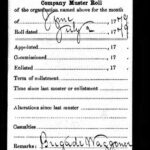
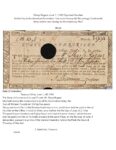
Military records tell us that Sharper Rogers enlisted “for the war” in February 1777. They also show who he served alongside, what he was paid, that he worked as a “brigade waggoner,” and that he spent several months in the hospital at Danbury during the winter of 1779. Details of Rogers’ pre- and post-war life are less clear, though evidence allows us to posit some theories. A 1760 manumission for a man named Sharper suggests Rogers may have been enslaved and then freed in Guilford and that he was likely the father of a child named Cesar. Cesar’s mother, Flora, died in 1765, at which point Cesar remained enslaved in a Guilford household. After gaining his freedom, Cesar took on the surname Rogers. A post-war marriage record shows a “Sharper Rogers” marrying an enslaved woman named Phillis in New Haven. Two years after their marriage, Phillis gained her freedom. Eventually a “Phillis Rogers” can be seen working in a Guilford church alongside Cesar Rogers. The record does not mention Sharper Rogers again, suggesting he may have died sometime in the early 1800s.
Primary Sources
Project Documentation