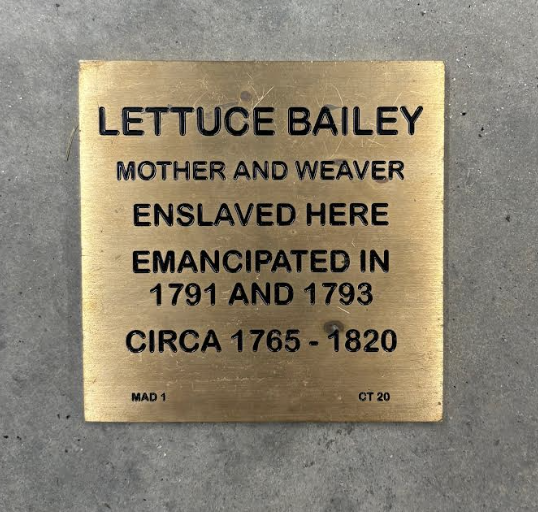
Lettuce Bailey
Lettuce Bailey was born to her mother, Tamar, sometime around 1765 in either East Guilford, CT (now Madison) or Africa. In the 1876 book John Todd: The Story of His Life Told Mainly by Himself, the author, John Todd, recounts a story about a ship that “washed ashore” near East Guilford (now Madison), where his great-uncle, Rev. Jonathan Todd, was minister of the Congregational Church. “From the wreck several Africans, directly from Guinea, emerged,” Todd writes. “I never knew all the circumstances, but they came into his hands….He gave them Scripture names—Cush, Tamar, and the like.”
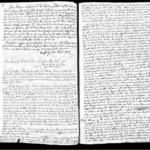
Lettuce’s name first appears in a written account in 1791, when Rev. Todd mentions her name, along with her mother and her children, Emma, Sukey, and Peleg, in his will. Writing that he had “long been convinced … that the enslaving of the Africans brought from Africa, or those born in this country, is unjust, and it is one of the sins of the land,” Rev. Todd freed Lettuce, Tamar, and the children. He also promised land and items that might help them make ends meet, such as a cow and a loom. However, these provisions, and their freedom, were conditional. If they were unable to take care of themselves, they would “fall under the discretion of [Rev. Todd’s] heirs.”
That appears to be what happened in short order. But in 1792, a new Connecticut law was passed, holding that if a person was between the ages of 25 and 45, wished to be free, and could pass a test indicating he or she was healthy, freedom could be granted by local town officials. Lettuce met those conditions and was freed a second time.
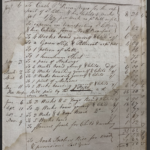
Life was still far from easy, however. Lettuce lost a young child in 1812 and her mother died in 1816. Starting in 1810, there are multiple entries for a “Lettuce Bailey” in Guilford almshouse records, where a man named Cesar Bailey is also mentioned. In 1820, Guilford’s death records list the following information: “Lettuce Bailey – a negro wife of Cesar – 55 – Dec 4th 1820.”
Significant Dates
- 1765: Birth
Primary Sources