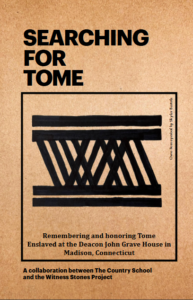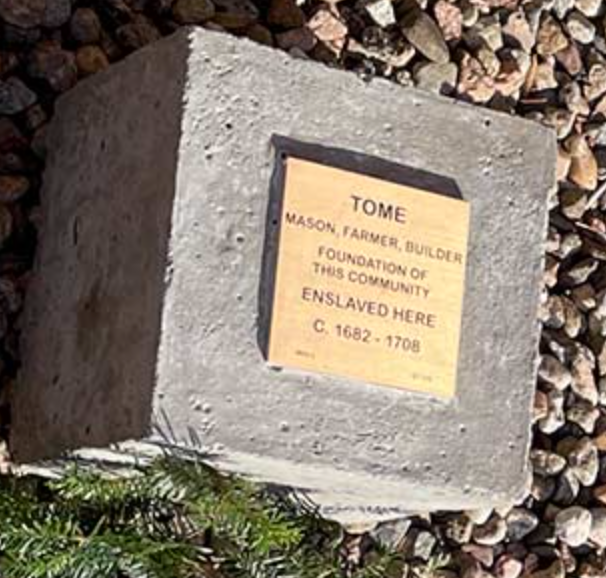
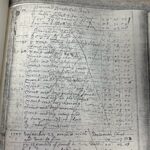
A three-volume account book kept by multiple generations of the Grave family, primary sources such as church and probate records, and stories passed down through the centuries allow us to envision the early inhabitants of the Deacon John Grave House, one of Connecticut’s oldest houses, dating to 1681. In addition to Grave family members, its residents numbered a series of enslaved persons. The first of these, based on entries in the account book, appears to have been a man named Tome, who lived and labored in the household in the late 1600s and early 1700s.
Starting with a 1682 record that shows “Tome” framing a house, the account book shows an individual by the same name performing work for neighbors, with John Grave II collecting money for his labor. Until his name disappears from the record in 1707, we see Tome planting, hoeing, and plowing fields, cutting and carting wood, building fences, spreading flax, tending to a coal pit, draining the “swamp,” collecting shells to make mortar, and assisting a mason. Beyond dozens of appearances of his name, the specific labor he performed, and the money John Grave charged for his work, the account book offers no personal information about Tome.
Primary Sources
Project Documentation