Crumbo
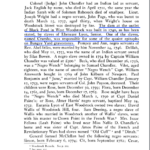
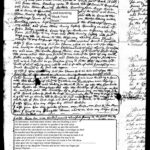
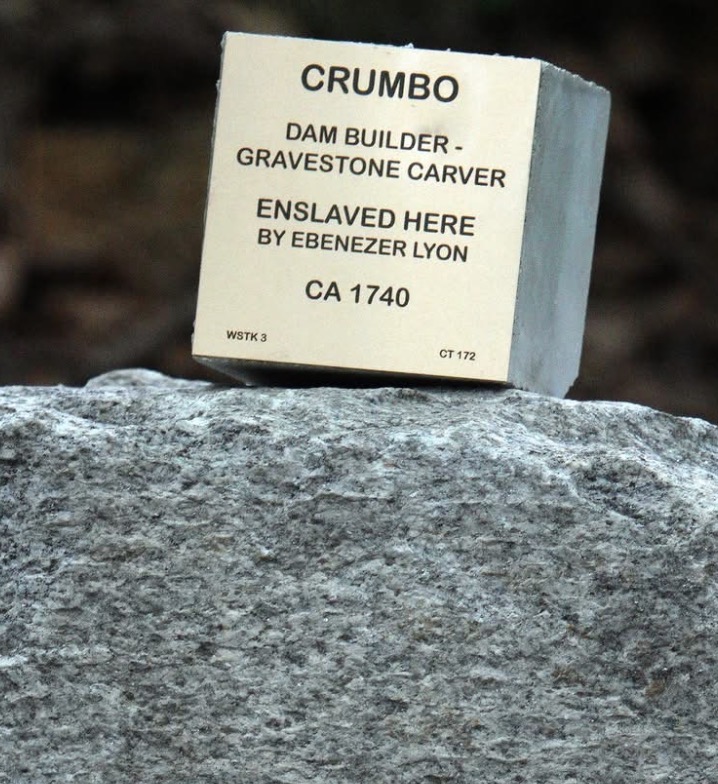
In 1740, individuals enslaved by Ebenezer Lyon are said to have constructed a stone dam on the outlet stream of Black Pond in Woodstock. The dam, which would be used to harness the water to operate bellows for one of the first known iron-making works in Connecticut, was listed on the National Register of Historic Places in 1996. Crumbo was among the enslaved individuals who helped build the dam, according to Clarence Winthrop Bowen in his 1926 book, The History of Woodstock Connecticut. Bowen also cited Crumbo’s handiwork on the grave markers in the nearby graveyard, writing, “One of the slaves named Crumbo was also responsible for some of the quaint epitaphs on Bungay Yard gravestones.” Although additional records capable of documenting Crumbo’s life and imprint on the community have not been found, Ebenezer Lyons’ 1762 probate record corroborates that at his death in 1762 he owned land “bounding Black Pond Brook,” that he was giving his son, Ebenezer “at the place where I am now building a corn mill” land that would be “the most convenient” to the mill, and “my negro boy named Barbados.” To his daughter, he promised “my negro girl named Rachel.” Crumbo was not mentioned.
Primary Sources