Lucy Terry Prince
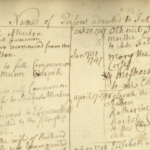
Stolen from her home in Africa and brought to New England as a young child, Lucy Terry Prince (c. 1728-1821) was initially enslaved by the Terry family in what is now Enfield, CT. At the age of 7 or 8, Lucy was sold to Ebenezer and Abigail Wells of Deerfield, who had her baptized in 1735. She likely performed household tasks such as cooking, carding and spinning wool, and dairying, as well as working at a tavern the couple ran from their home for two years. Lucy was known for her piety and her remarkable story-telling abilities. She composed “The Bars Fight,” a ballad poem commemorating an attack in 1746 by Indigenous warriors in which several Deerfield men and children were killed. Lucy’s poem is believed to be the earliest documented poem composed by an African American in North America. Passed down orally by Deerfield residents for more than a century, it did not appear in print until 1854.
In 1756, Lucy Terry married Abijah Prince, a free African American man. Lucy was also free by the time their first child was born the following year. The Princes and their six children lived for almost 20 years on a section of the Wells homelot. In 1775, they moved to land Abijah Prince owned in Guilford, Vermont. When some of their neighbors began harassing and physically assaulting the Princes, Lucy Terry Prince argued their case before the Vermont governor and won the protection she requested. Later, when another neighbor claimed that he owned a portion of the Princes’ land, she successfully argued that case in court, too. Lucy was less successful when she addressed leaders of Williams College on behalf of her son, who had been denied admission because of his race.
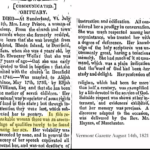
Widowed for 27 years, Lucy Terry Prince died in 1821 in her 90s. A lengthy obituary in The Vermont Gazette commemorated her life, an unusual occurrence for any woman at that time. “Her volubility was exceeded by none, and in general, the fluency of her speech captivated all around her and was not destitute of instruction and edification…All considered her a prodigy in conversation. She was much respected among her acquaintance, who treated her with a degree of deference.”