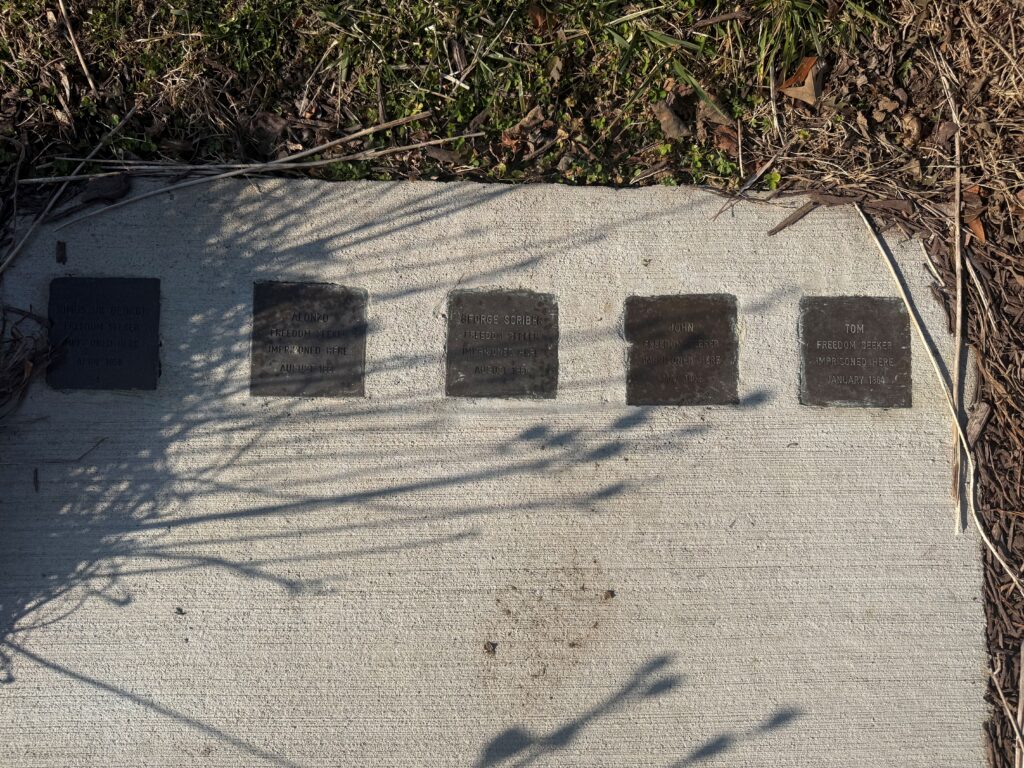
Alonzo
In August 1860, the St. Mary’s Beacon reported that a man named Alonzo had been brought to the Old Jail in Leonardtown. Alonzo had been enslaved by H. G. S. Key of Leonardtown, but had been making his way north toward Philadelphia.
At some point during his journey, Alonzo had taken shelter in a cave near the residence of Joseph Simms in the Patuxent District — suggesting he had been moving carefully, waiting for the right opportunity. When he spotted Captain Tucker’s vessel heading up the Patuxent River, he hailed the boat and asked for passage to Philadelphia. Tucker asked whether he was a free man, and Alonzo said that he was.
At the time, free Black men and women typically carried official documents to prove their status — manumission papers if they had been voluntarily freed by an enslaver, or certificates of freedom issued by the courts. When Tucker asked to see Alonzo’s papers, Alonzo replied that they were at home. Tucker didn’t believe him and had him arrested.
The story drew enough attention to be reprinted in the Baltimore Sun — one measure of how charged the question of freedom and movement had become in Maryland in the years leading up to the Civil War.
Project Documentation