Robin Freeman
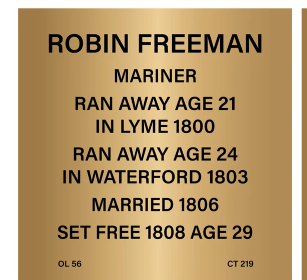
Robin’s boyhood and later life cannot be traced, but several documents shed light on his circumstances between 1800, when at age 21 he ran away from Jasper Peck Jr. in Lyme, and 1808 when he was released from slavery. During that brief eight-year period he lived in three households, was sold twice, ran away twice, went to sea twice, married, had a son, and was set free.
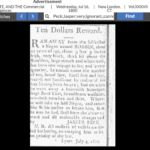
Runaway advertisements in 1800 and 1803 describe Robin’s appearance, characteristics, and clothing as depicted by white owners attempting to retrieve him. He sometimes called himself Robin Peck, his skin was very dark, his lips were thick, and his shoulders were thick-set. He was 5’3” tall, had a scar on the back of his head “under his wool,” and walked “not handsomely” because his feet had previously been frozen. He was said to be “very ignorant” and not able to count to twenty. The earlier advertisement, offering a $10 reward, stated that he could be returned to Jasper Peck’s son Capt. Oliver Peck in Montville, from whose vessel Robin may have fled. Where, when, and by whom Robin was “taken up” and returned is not known.
After his first escape, Robin was purchased by Charles Smith and Shubael Smith from Groton, from whom he also ran away, this time at age 24 in Waterford. A newspaper notice in 1803, offering a $5 reward, noted that Robin had been to sea twice and included a warning to sailors against harboring the runaway or carrying him to sea, on penalty of the law. To aid in Robin’s identification, the advertisement listed the clothing he was wearing when he fled: a blue sailor jacket and trousers, checked shirt, striped jacket, and black hat. He took with him other clothing that he may have changed into.
After Robin’s second flight, Jacob Gurley, a lawyer in New London, purchased the former slave of Jasper Peck. Gurley allowed Robin in 1806, likely to deter further runaway attempts. Robin married Sylvia Pendleton, who apparently had a five year old son John Murry, and two years later in 1808 Gurley emancipated Robin before the birth of his and Sylvia’s son Thomas, rather than continuing to maintain a slave with a growing family. No subsequent references to Robin, by then age 29 and called Robin Freeman, or to his wife and son have been found.
The sources, though scarce, make clear that Robin’s labor was valued. They also convey his determination and resilience. Despite a small stature, physical disability, and lack of formal education, Robin had the initiative, ingenuity, and resourcefulness to attempt twice to emancipate himself. But the documents that trace his enslavement leave many questions. Where was he born, who were his parents, did he have siblings, how and when did he come to Lyme, where did he go when he ran away, what happened after his marriage and manumission, did he find work to support his family, did he go to sea again, how did his later years unfold?
Research and bio provided by Witness Stones – Old Lyme
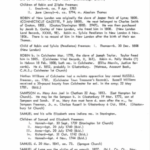
Primary Sources